



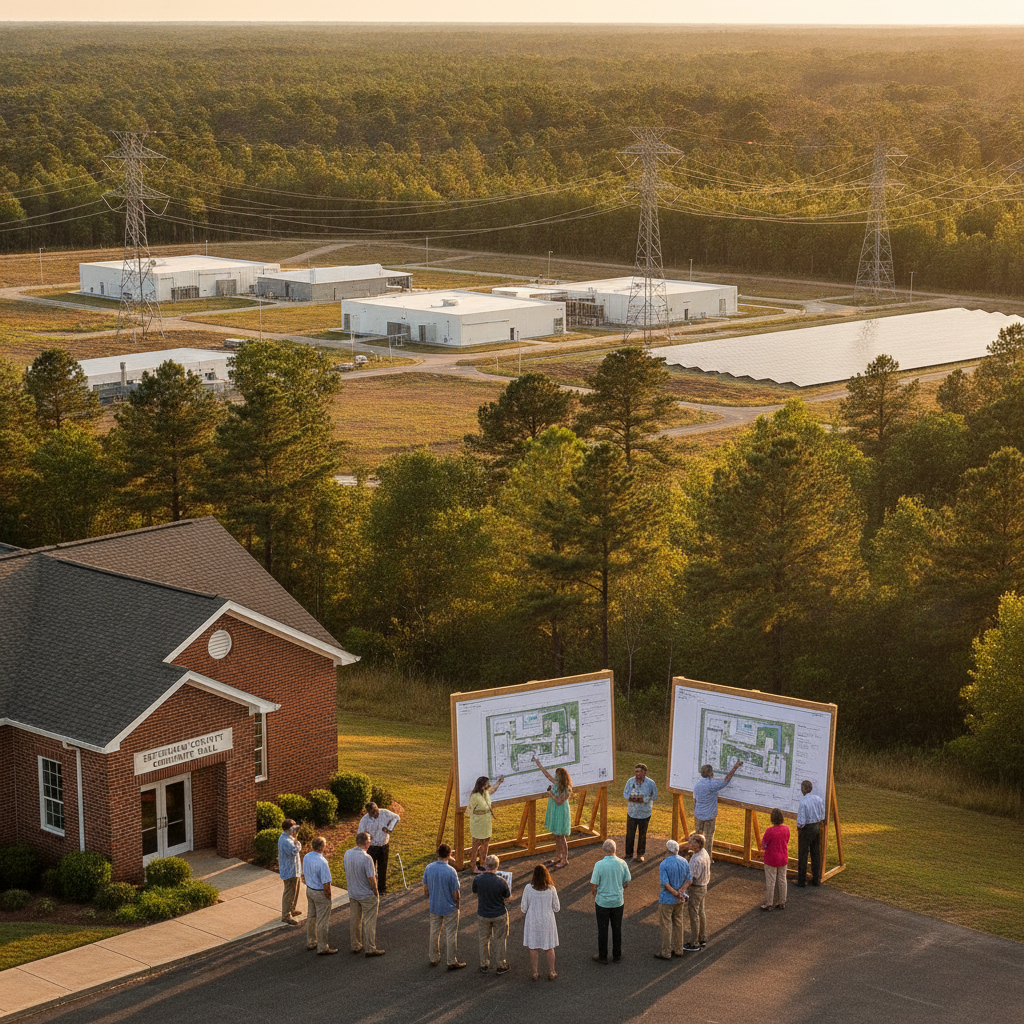
OpenAI has outlined its approach to building AI infrastructure with the Effingham County community in Georgia. The announcement emphasizes partnership, responsible growth, and long-term local benefits—signals that the AI buildout can create value beyond compute.
Why it matters
AI demand is soaring, and data centers require significant power, land, and cooling. Communities want the jobs and tax base—without unchecked strain on grids, water, or roads.
The U.S. Department of Energy notes data centers are among the most energy-intensive building types, making efficiency and grid planning essential from day one.
A community-first AI infrastructure playbook
- Start with listening: Engage residents, schools, and local officials early. Share a plain-English plan and feedback loop before shovels hit the ground.
- Develop the workforce locally: Create paid apprenticeships, support technical college pathways, and cross-train veterans and utility technicians for data center roles.
- Plan power with the utility: Co-develop realistic timelines, grid upgrades, and demand response. Pair new load with long-term renewable procurement.
- Design for efficiency: Target strong PUE and WUE, optimize airflow and cooling, and monitor usage in real time to reduce both energy and water intensity.
- Protect water and land: Prioritize water-efficient systems, minimize freshwater withdrawals, and preserve buffers with native vegetation.
- Be transparent on impacts: Publish environmental baselines, construction traffic plans, and community-benefit commitments with measurable targets.
- Buy local, pay it forward: Set supplier diversity goals, route maintenance contracts to small businesses, and contribute to STEM programs and broadband access.
Quick checklist for operators, founders, and city leaders
- Map stakeholders and schedule quarterly community briefings with published Q&A.
- Align site selection with grid capacity, transmission plans, and renewable availability.
- Stand up a local talent pipeline with clear job ladders and certification support.
- Set environmental KPIs and publish them: PUE, WUE, renewable share, and water sources.
- Codify community benefits (e.g., scholarships, road improvements) in writing.
- Create an incident-response plan for outages, extreme weather, or construction impacts.
Metrics that matter
- PUE and WUE trends, benchmarked annually
- Renewable energy share of electricity use
- Local hiring percentage and median wages
- Supplier diversity and local procurement spend
- Water source mix and peak-day withdrawals
- Community satisfaction score from regular surveys
What to watch next
Permitting timelines, grid interconnection queues, and talent availability will shape how quickly AI capacity comes online. Expect more projects to adopt community-first commitments as competition for power and public trust intensifies.
Sources
- OpenAI: Building AI infrastructure with the Effingham County community
- U.S. Department of Energy: Data centers and energy efficiency overview
Takeaway
AI infrastructure can be a long-term win for communities when operators pair technical excellence with early engagement, transparent metrics, and durable local benefits.
Like this nugget? Get weekly, no-fluff insights in your inbox—subscribe to The AI Nuggets newsletter.
