



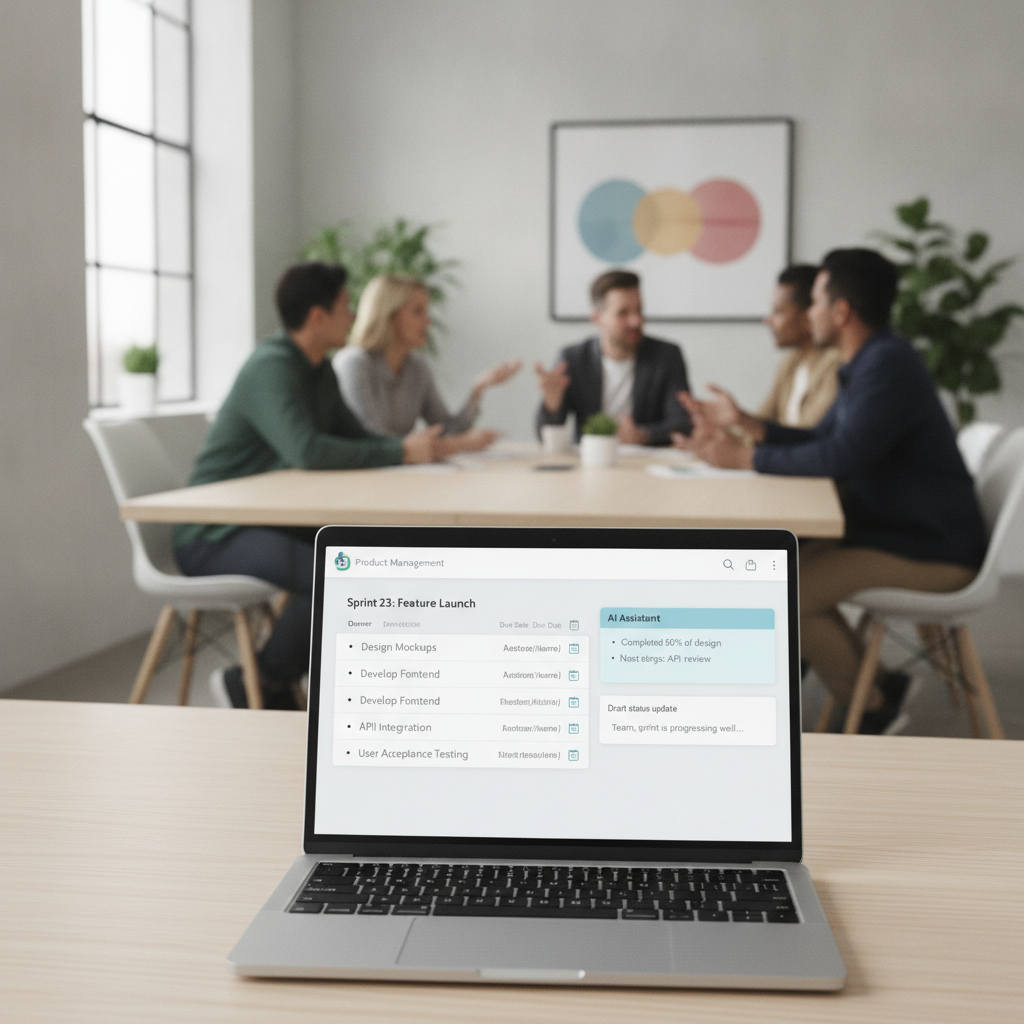
Asana is turning AI into everyday leverage, not hype. Powered by OpenAI, Asana’s AI features help teams summarize work, draft updates, and automate routine coordination where context matters most.
According to the OpenAI + Asana case study, the value comes from pairing strong models with Asana’s Work Graph—structured data about people, tasks, and projects—so outputs stay relevant and actionable.
What Asana shipped with OpenAI
- AI summaries of tasks, comment threads, and project status to cut reading time.
- Drafts for briefs, tasks, and status updates that teams can edit and approve.
- Natural-language commands to create tasks, set due dates, and apply rules.
- Context-aware suggestions anchored in Work Graph data (owners, priorities, dependencies).
These features live where work already happens, keeping humans in the loop for final judgment (source).
Why this approach works
- Structured context: The Work Graph gives the model clean, relevant data (owners, due dates, relationships).
- Right-sized tasks: Summarization and drafting deliver fast wins with low risk.
- Embedded guardrails: Humans review, edit, and approve before anything ships to stakeholders.
Copy the playbook in 90 days
- Weeks 1–2: Map 3–5 high-friction workflows (status updates, handoffs, meeting notes). Define success metrics (cycle time, update freshness, time saved).
- Weeks 3–4: Structure your data. Normalize owners, dates, project links; centralize in a “work graph” (even a clean spreadsheet beats scattered docs).
- Weeks 5–6: Pilot summarization and status-drafting. Keep humans-in-the-loop for approval. Start with a single team.
- Weeks 7–8: Embed where work happens (PM tool, chat, docs). Add audit logs and clear prompts explaining limits.
- Weeks 9–12: Expand to task creation and rule automation. Document edge cases and escalation paths.
Starter prompts you can steal
- Project status summary: “Summarize this project for executives in 5 bullet points: goals, progress since last update, blockers, owners, next 3 actions with dates. Use only the provided context.”
- Task brief draft: “From the notes below, draft a task titled ‘{clear outcome}’ with acceptance criteria, owner, due date, and dependencies. Ask 3 clarifying questions if context is missing.”
- Handoff checklist: “Generate a handoff checklist for {feature/initiative} including links, risk callouts, and verification steps tailored to the stakeholders listed.”
KPIs to track
- Cycle time: Creation → approval for status updates and briefs.
- Update freshness: % of projects with up-to-date status each week.
- Edit rate: Share of AI drafts requiring major edits (should drop over time).
- Adoption: Weekly active users and number of AI-assisted actions.
Implementation tips
- Ground responses: Always pass structured context (owners, deadlines, links) with the prompt.
- Constrain tone/format: Ask for fixed templates (bullets, headers, next steps) to reduce variance.
- Tight feedback loop: Capture edits to improve prompts and instructions over time.
Key takeaway
Asana’s advantage isn’t just a powerful model—it’s product design plus structured data and human review. Start with summarization and drafting, keep context tight, and measure relentlessly.
Source: OpenAI – Asana case study
Enjoy this? Get one actionable AI nugget in your inbox each week—subscribe to our newsletter: theainuggets.com/newsletter
