



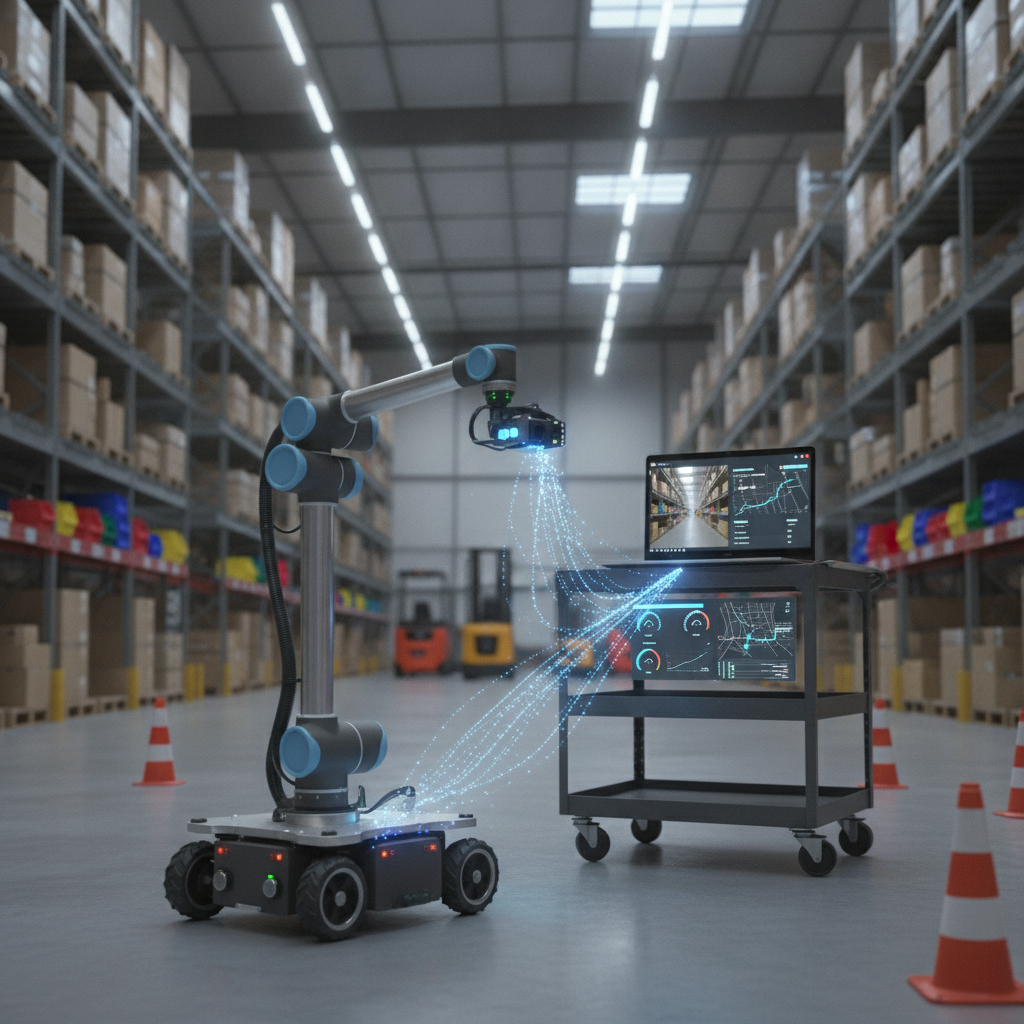
Amazon’s STRANDS and Hugging Face’s LeRobot highlight a practical pattern for scaling robot learning: a streaming data loop that moves sensor data from robots to the cloud, trains policies, and ships updates back to hardware. The approach, outlined in Hugging Face’s blog, is a blueprint teams can adapt today.
Source: Hugging Face Blog — STRANDS + LeRobot streaming data loop
What’s new
The post describes a streaming-first robotics workflow: capture rich on-robot data, stream it reliably, curate and label, train with LeRobot, then deploy policies back to the fleet with safety checks. It’s a simple, repeatable loop that shortens iteration cycles.
Why it matters
- Faster learning: reduce the time from data capture to deployed policy.
- Fleet-scale feedback: learn from many robots, not just one bench rig.
- Reproducibility: standardized schemas and pipelines improve auditability.
- Lower friction: minimize manual data offloads and brittle, one-off scripts.
The streaming loop, step by step
- Capture: Collect synchronized multimodal telemetry (RGB, depth, proprioception, actions). Use ring buffers and clock sync.
- Stream: Send data via a low-latency, reliable transport to a secure gateway. Encrypt in transit.
- Store & index: Land to durable object storage with a clear schema and searchable metadata for quick retrieval.
- Curate: Triage, label, and filter with human-in-the-loop and active-learning cues to prioritize high-value episodes.
- Train (LeRobot): Use LeRobot to train and evaluate policies on curated datasets, starting with offline imitation/behavior cloning before on-robot testing.
- Deploy: Gate releases with checklists, shadow-mode trials, rollback plans, and continuous monitoring.
A reference stack you can replicate
- On-robot: ROS 2 for message passing and timestamping; GStreamer for video; hardware time sync.
- Edge gateway: Jetson or x86 box with a container runtime; secure tunnel to cloud.
- Transport: WebRTC, RTSP, or ROS 2 bridges; ensure QoS profiles fit your bandwidth and loss patterns.
- Storage & catalog: S3/GCS + Parquet or Arrow; dataset manifests with versioning.
- Training: PyTorch + LeRobot on managed or self-hosted GPUs.
- Orchestration: Airflow/Prefect for data & training jobs; CI/CD for policies.
- Observability: Prometheus/Grafana and tracing (OpenTelemetry) for system health and drift.
Quick-start tips with LeRobot
- Begin offline-first: record to disk, structure your dataset, and train a baseline policy with LeRobot before introducing streaming.
- Define a minimal schema: episode ID, timestamps, sensors, actions, and success flags—so curation and search stay fast.
- Automate curation: triage by heuristics (e.g., success/timeout), then sample “hard” episodes for labeling.
- Add streaming last: once your loop works end-to-end, switch ingestion to a live transport and scale out.
Risks and guardrails
- Safety first: require deadman switches, e-stops, and clear test protocols before on-robot policy trials.
- Privacy & IP: encrypt data at rest/in transit; scrub PII; restrict access via fine-grained roles.
- Drift & regressions: evaluate on fixed test suites; compare policies with A/B or shadow runs.
- Cost control: throttle streaming rates, compress video, and set lifecycle rules on storage.
Takeaway
A streaming data loop—like the one described with STRANDS and LeRobot—shrinks the gap between real-world experience and better robot policies. Start offline, nail your schema and curation, then turn on streaming and scale with safety.
Want more practical AI build patterns? Subscribe to our free newsletter for weekly nuggets: theainuggets.com/newsletter.
