



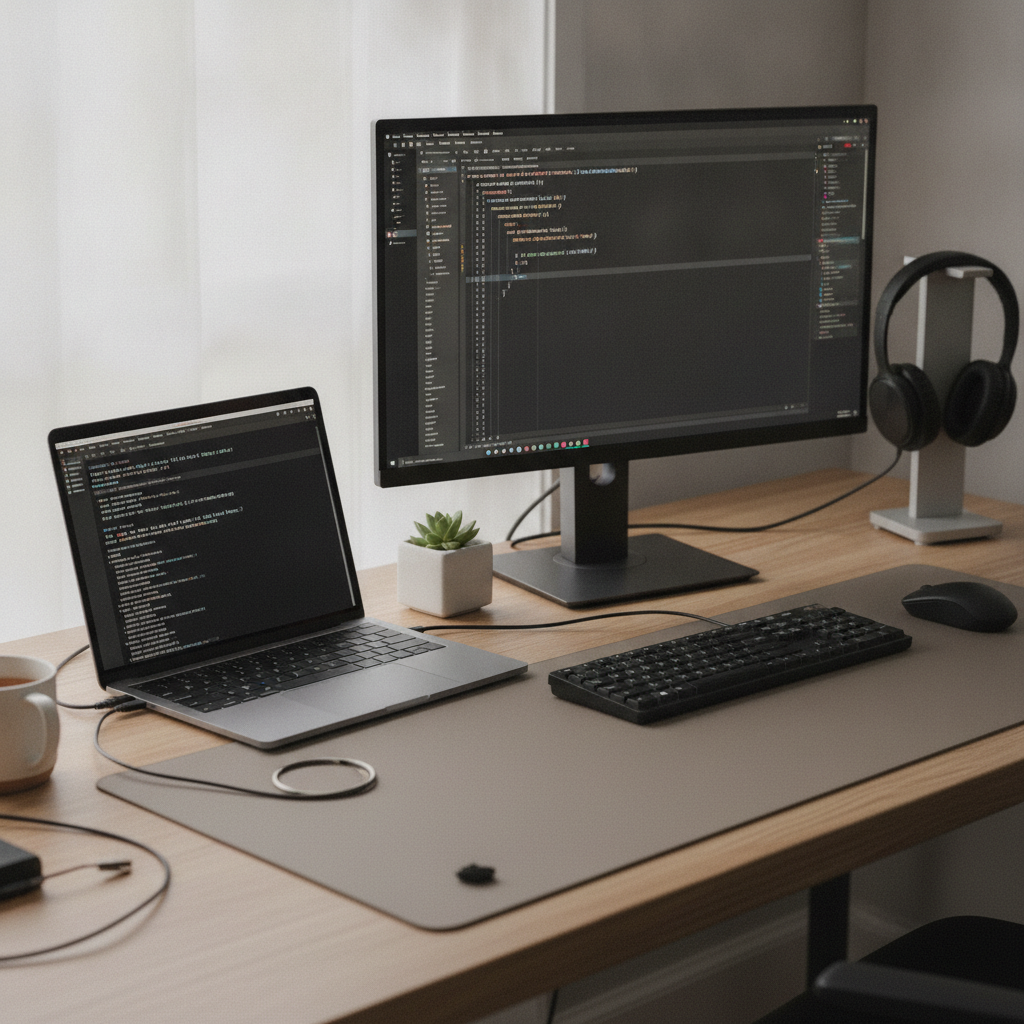
Georgi Gerganov helped turn “local AI” from a niche experiment into a practical reality. His projects—llama.cpp and whisper.cpp—show how careful C/C++ engineering and smart quantization make large models run on everyday machines—fast, private, and cheap.
What makes llama.cpp so fast
- Quantization: 4–5 bit weights slash RAM/VRAM while preserving usable accuracy for many tasks. See background on post‑training quantization like GPTQ.
- Memory locality: GGML’s cache‑friendly tensor layouts reduce memory bandwidth bottlenecks often seen in Python stacks.
- Lean runtime: Minimal dependencies in C/C++ keep overhead low, with optional acceleration via Metal (Apple Silicon) and CUDA (NVIDIA).
- Token streaming: Small batches and streamed generation improve perceived latency for chat workloads.
A 10‑minute plan to run a local LLM
- Pick a size: 7B runs well on modern laptops; 13B can work with more RAM/VRAM or modest GPU offload. Prefer instruction‑tuned variants for chat.
- Get a quantized GGUF model from a reputable hub (e.g., Hugging Face GGUF).
- Use llama.cpp binaries or build from source. Try server mode for an OpenAI‑style API and set a reasonable context window.
- Accelerate if you can: offload layers to CUDA (NVIDIA) or Metal (Apple Silicon) to raise tokens/sec.
- Benchmark your real prompts. Track tokens/sec, response quality, and memory usage before scaling up.
Speed and quality tips
- Start with Q4_K_M for speed; move to Q5_K_M if quality dips. Use higher‑bit quants (e.g., Q8_0) for evaluation baselines.
- Trim prompts and context length—the KV cache grows with tokens and eats RAM/VRAM quickly.
- Reuse a stable system prompt to keep outputs consistent and reduce prompt bloat.
- Compile with native flags (AVX2/NEON) and enable GPU offload where available.
- Batch short requests to amortize overhead in automation pipelines.
Watchouts
- Quantization trade‑offs: aggressive 4‑bit can hurt math, tool use, or code tasks—test against your ground truth.
- Context costs: long contexts balloon memory and slow decoding; validate you truly need them.
- Licensing: respect model licenses and data policies; some weights restrict commercial use.
- Security: local ≠ automatically safe—sanitize PII and secure any exposed local endpoints.
Takeaway
llama.cpp proves you can get useful, private LLMs without cloud bills. Start small, quantize smart, watch memory, and accelerate where you can—then iterate.
Sources
Like nuggets like this? Get our 2‑minute newsletter for practical AI tips: theainuggets.com/newsletter
