



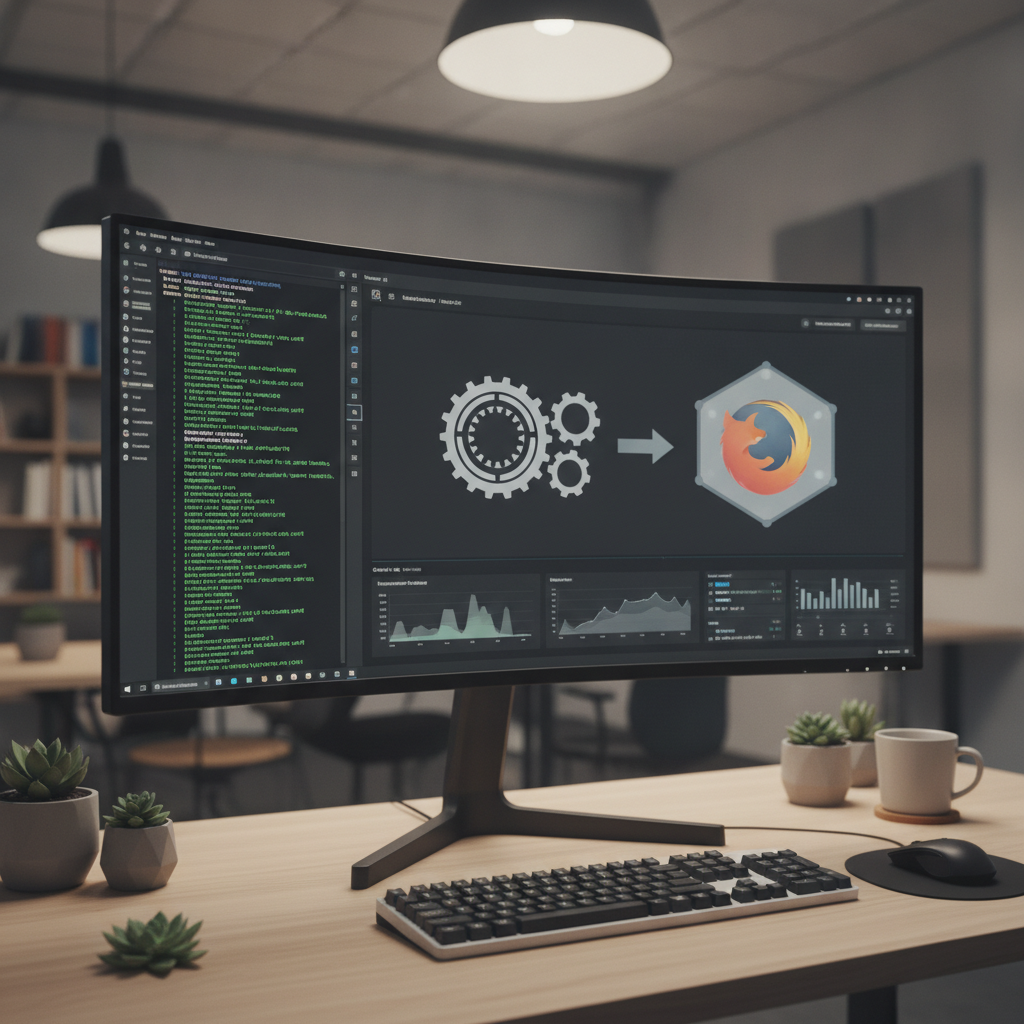
Firefox compiled to run inside WebAssembly is more than a neat hack—it’s a glimpse of how we might ship, test, and secure the web stack in the next few years. For background, see Simon Willison’s note: Firefox in WebAssembly.
WebAssembly (Wasm) is a portable, sandboxed binary format that lets native code run across platforms with near‑native speed. Packaging a full browser engine in Wasm could make it portable, reproducible, and easier to isolate.
Why it matters
- Reproducible tests: Ship the exact same browser build across laptops, CI, and servers to cut “works on my machine” bugs in UI and end‑to‑end tests (think Playwright/Selenium). See Playwright.
- Edge portability: A Wasm‑packaged, headless browser could run in Wasm‑capable runtimes on the edge for fast screenshots, rendering, and form‑fills. Try runtimes like Wasmtime.
- Security by default: Wasm’s capability‑based sandbox plus WASI can tightly control file, network, and clock access—useful for opening untrusted pages or running plug‑ins. Background: Bytecode Alliance.
- Architecture neutrality: One .wasm binary can target multiple CPU/OS combos, simplifying fleet management and devcontainers.
- Education and research: Ship a self‑contained “lab browser” for security courses and experiments without polluting the host.
What you can do today
- Kick the tires on Wasm runtimes: benchmark cold‑start, memory, and throughput with Wasmtime and Wasmer.
- Follow WASI + Component Model progress to understand how modules compose and get capability‑scoped I/O: WASI, Component Model.
- Prototype a headless workflow: run rendering, PDF generation, or visual diffs in an ephemeral Wasm module and compare against container baselines.
- Harden automation: isolate untrusted pages in Wasm sandboxes with explicit network and file permissions; log all granted capabilities.
- Track platform gaps: GPU, fonts, and some system APIs are still evolving in Wasm/WASI. Keep an eye on the spec and proposals at webassembly.org.
Risks and caveats
- Performance trade‑offs: Start‑up and CPU overhead may exceed a native build for heavy pages; measure before migrating.
- Missing APIs: Not every system call or GPU feature is exposed in WASI yet; expect workarounds for networking, fonts, and hardware acceleration.
- Binary size: Browser engines are large—watch download times, caching, and cold starts in serverless/edge environments.
- Licensing and updates: Treat the Wasm browser like any third‑party runtime—track CVEs and ship timely updates.
The takeaway
A browser packaged as WebAssembly won’t replace native engines tomorrow, but it unlocks portable, reproducible, and safer automation. Start with small Wasm pilots for rendering, testing, or sandboxing—and measure.
If you enjoy practical, no‑fluff AI and infrastructure nuggets, subscribe to our newsletter: theainuggets.com/newsletter.
