



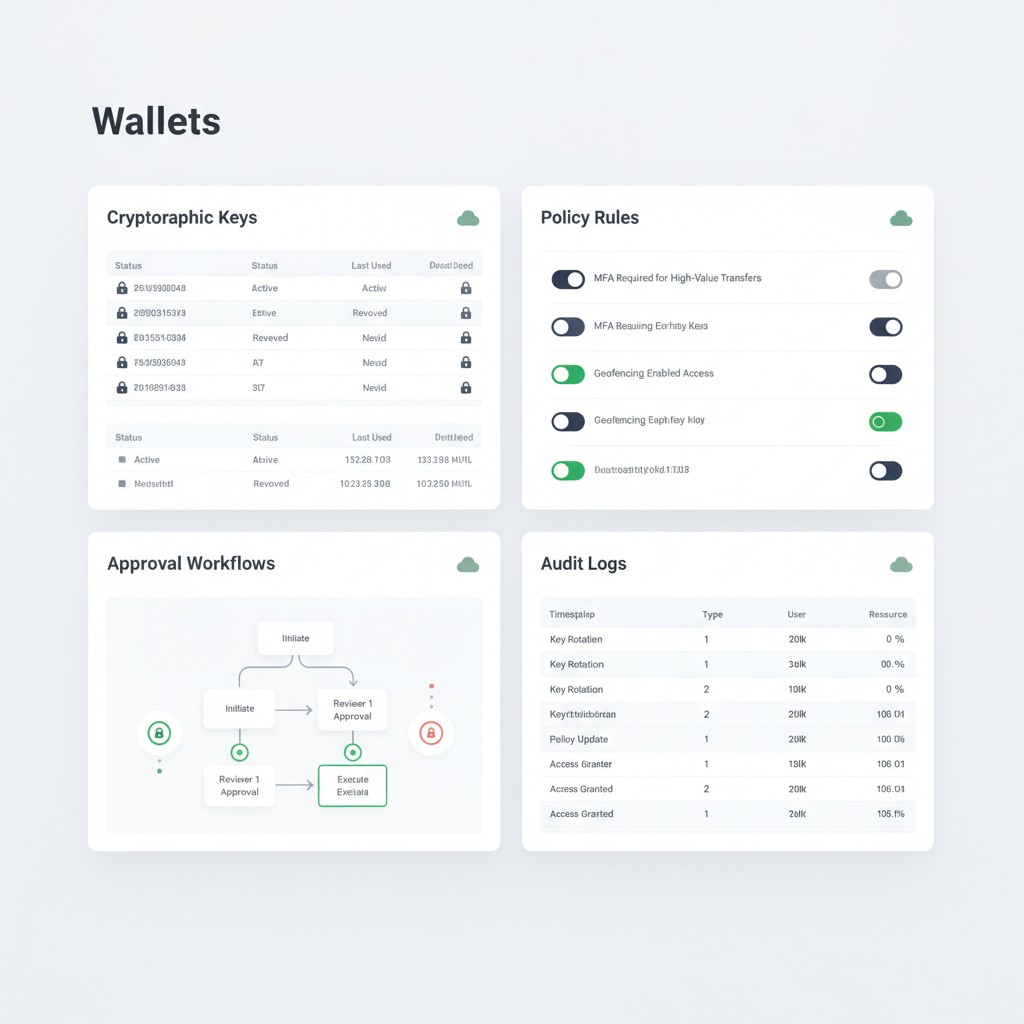
Cloudflare just reframed key management with “Wallets” — a policy-first way to hold and use cryptographic keys across systems. For AI and cloud teams drowning in API tokens, TLS cert keys, and signing secrets, this promises fewer breaches, better audit, and safer automation.
What Cloudflare announced
According to Cloudflare’s post, Wallets organize your most sensitive keys under a programmable policy layer, so cryptographic operations (like signing, decryption, TLS, code signing, or API request signing) happen with consistent approvals, identity checks, and logs — not scattered secrets. Read the announcement: Cloudflare: Wallets.
Why it matters for AI & cloud teams
- Key sprawl is a top breach vector: leaked API keys and signing secrets fuel supply-chain attacks.
- AI pipelines add more secrets (model API keys, data access tokens, signing keys for model artifacts).
- Regulators expect strong key lifecycle controls, approvals, and audit trails.
- Standardizing policies across environments (cloud, edge, CI/CD) reduces human error.
How “Wallets” help (in plain English)
Think of a Wallet as a secure home for your keys plus the rules for how they’re used. Apps ask the Wallet to do cryptographic work; policies decide who can do what, when, and from where — and everything is logged.
- Centralize keys: keep TLS, code-signing, API, and data-encryption keys under one control plane.
- Enforce policy: require approvals, device posture, geofencing, and least-privilege scopes.
- Abstract backends: use HSMs or cloud KMS without rewriting app logic.
- Gain observability: unify audit logs and key usage analytics for compliance and forensics.
Practical use cases
- AI pipelines: sign model artifacts, encrypt datasets, and gate model/API access with approvals.
- CI/CD: sign containers and releases; block unapproved or out-of-policy signing.
- Zero Trust access: terminate TLS with managed keys and consistent policy.
- API security: rotate and scope tokens; sign requests server-side to avoid client leaks.
Quick wins you can implement now
- Inventory secrets: list API keys, TLS keys, code-signing certs, data-encryption keys.
- Classify risk: tag keys by environment, blast radius, and data sensitivity.
- Policy baseline: require approvals for production signing and decryption.
- Short-lived credentials: rotate API keys; prefer ephemeral tokens where possible.
- Server-side signing: move client-held secrets to a central signing service.
- Passkeys for admins: protect key admins with phishing-resistant auth (WebAuthn).
- Compliance map: align with NIST SP 800-57 for key lifecycles, strength, and rotation.
Risks and what to watch
- Blast radius: centralization raises stakes — require strong admin controls and break-glass.
- Latency: keep signing close to workloads (edge/regional) for performance-sensitive paths.
- Interoperability: ensure support for your clouds, HSM/KMS, and identity providers.
- Vendor lock-in: prefer standards-based interfaces and exportable key metadata/policies.
The takeaway
Wallets shift security from “where keys live” to “how keys are used.” If you run AI or cloud workloads at scale, treat keys as governed workflows with approvals, short lifetimes, and centralized audit — not as static secrets scattered across repos and VMs.
Want more practical AI and security nuggets? Subscribe to our newsletter: theainuggets.com/newsletter.
