



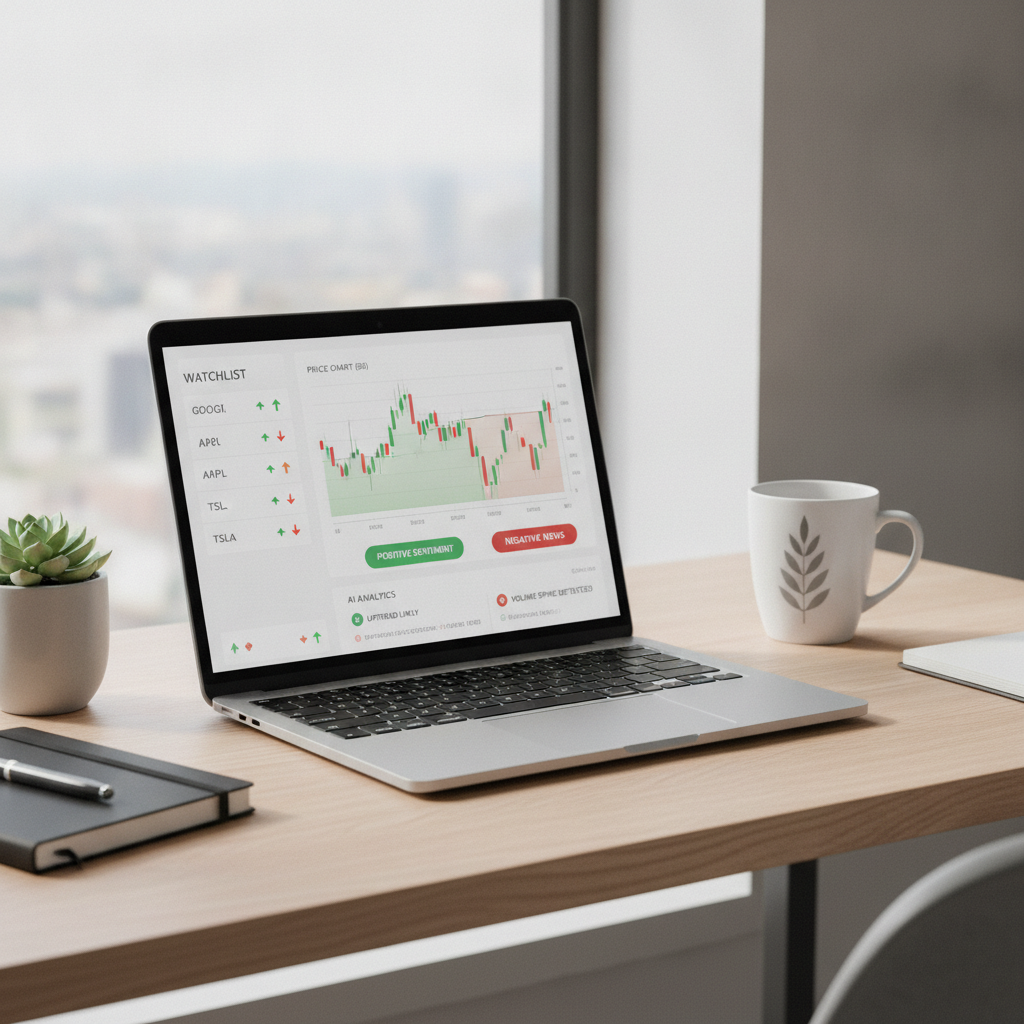
Google just rolled out updates to Google Finance. Rather than chasing every UI tweak, here are five practical AI workflows you can run today to turn any refresh into real portfolio edge.

Source: Google: Finance updates (June 2026). Focus below: actionable workflows you can implement regardless of interface changes.
1) Automate smarter watchlists with Sheets + an LLM
Turn watchlists into living dashboards that track price, valuation, and narrative catalysts.
- In Google Sheets, add tickers and use
GOOGLEFINANCE()to pull price, change, and market cap. Docs: GOOGLEFINANCE function. - Ask an LLM to summarize 3–5 recent articles per ticker and tag catalysts (e.g., product launches, regulatory risk) by timeframe (0–3, 3–12, 12+ months).
- Set rules: if price drops >3% on “negative” sentiment day, flag for review. Trigger Slack/email with simple Apps Script or Zapier.
2) Turn company pages into 1-page decision briefs
Use AI to compress noisy profile pages into crisp, comparable briefs for faster calls.
- Paste the latest company overview, earnings recap, and 10-K link into your LLM.
- Prompt for: moat, top 3 growth drivers, top 3 risks, leading KPIs, and valuation sanity check vs peers.
- Ask for bullet output plus a 100-word bear vs bull case to reduce bias.
3) Mix price signals with news sentiment for real-time alerts
Price alone is late. Blend market moves with tone to catch inflections earlier.
- Track intraday price/volume in Sheets. Scrape or paste headlines into an LLM for “positive/neutral/negative” tags and a 1–2 line rationale.
- Fire alerts only when both conditions hit: move (e.g., ±2%) + “strongly positive/negative” news in last 6 hours.
- Log alerts with outcome notes to refine thresholds over time.
4) Map your portfolio to themes and policy risk
AI can quickly label exposures so you see what really drives P&L.
- Export holdings. Ask an LLM to tag each name by themes (AI infra, consumer AI, EV supply chain, clean energy policy).
- Benchmark vs an ETF or custom index; set guardrails (e.g., <25% in any single theme).
- Create a “what could go wrong” checklist per theme (regulation, subsidy cliffs, rate sensitivity) to pressure-test positions.
5) Sanity-check hype with filings using light RAG
Before acting on a hot headline, anchor to primary sources.
- Pull the latest 10-K/20-F and earnings call transcript. Feed sections (Risk Factors, MD&A) to your LLM with the article or update.
- Ask: “Does the claim conflict with disclosures? What’s the base rate from the last 4 quarters?”
- Capture a confidence score and a 3-bullet decision note for your journal.
Quick guardrails
- Always verify numbers from AI against primary data (filings, official docs).
- Keep prompts specific and repeatable; save your best ones as templates.
- Backtest alert rules on past 3–6 months before going live.
Sources
Takeaway
Platform refreshes are nice, but durable edge comes from workflows. Wire AI into watchlists, briefs, and alerts so every UI change translates into repeatable action.
Like practical AI playbooks like this? Subscribe to our free newsletter for weekly, no-hype breakdowns: theainuggets.com/newsletter.
