



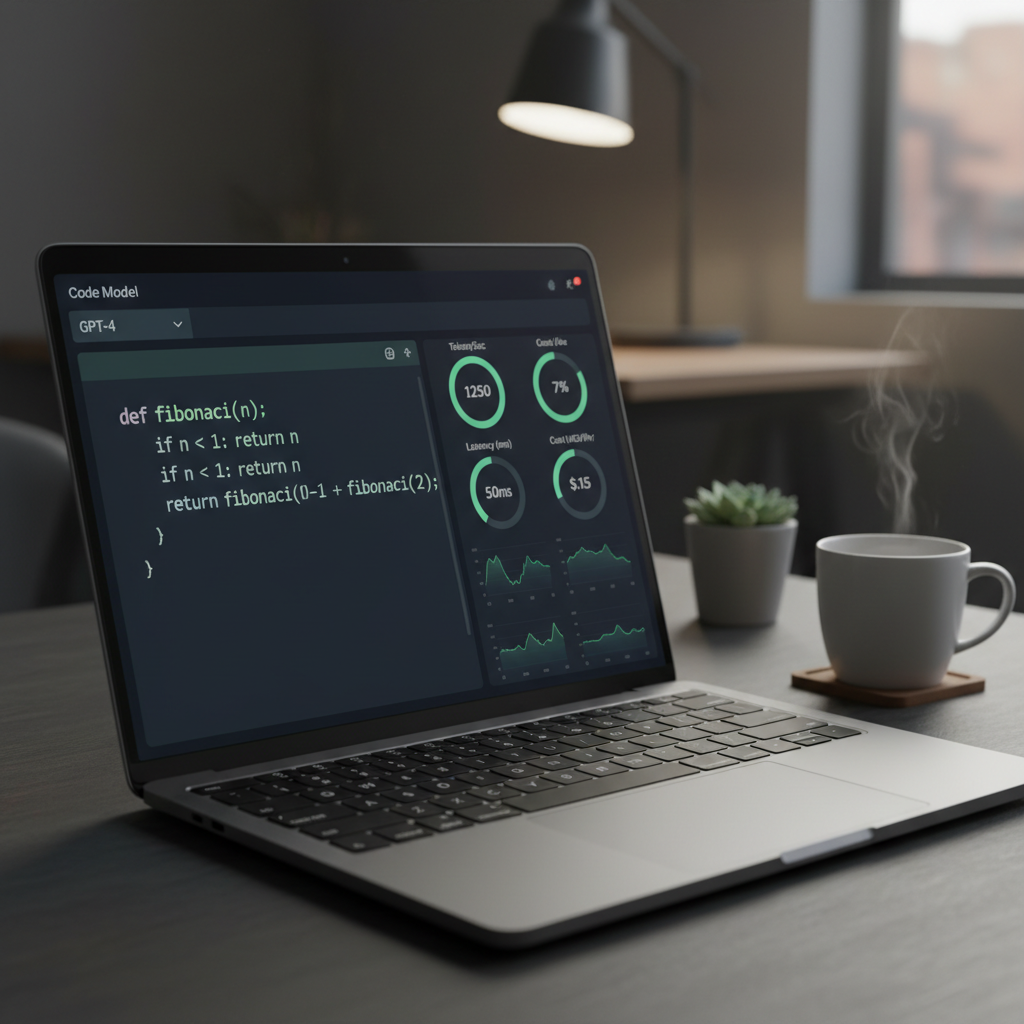
Two signals are shaping AI dev stacks right now: code-specialist models are resurging, and usage “meters” are becoming first-class product levers. Here’s what that means for engineering leaders and how to adapt quickly.
Why code-specialist models are back
General LLMs are great, but code-focused models often deliver faster responses, tighter determinism, and lower cost for routine dev tasks. As reported by Latent Space, the pendulum is swinging back toward purpose-built models for coding work.
Use them when the task is structured and testable: refactors, unit tests, SQL generation, boilerplate, and simple bug fixes. Keep a larger, general model in reserve for ambiguous prompts or complex reasoning.
- Default to a code model for CRUD, tests, migrations, and linters.
- Auto-escalate to a larger general model on failure or low confidence.
- Cache successful prompts and snippets to reduce repeat spend.
Source: Latent Space’s roundup of developer-focused AI shifts (read here).
What “meters” mean for your budget and UX
Providers increasingly meter by tokens (input/output), context length, or advanced capabilities. Treat these meters like real product constraints—budget them per feature, not just per user.
- Instrument usage: log tokens, latency, cost, and success rate per action.
- Set guardrails: soft caps (warn) and hard caps (fallback or queue) per workflow.
- Watch p50/p95: alert when costs or latency drift outside SLOs.
- Price transparently: communicate meter units (e.g., tokens) in plans and in-product.
Authoritative reference: Anthropic’s pricing page details token-based metering and model tiers (anthropic.com/pricing).
A 5-step rollout plan
- Pick a code-model baseline: start with your preferred code-specialist model for deterministic tasks.
- Add a router: small/fast model first; escalate to a larger model on failure or uncertainty.
- Offline evals: unit-test prompts on a fixed suite; track accuracy, cost, and latency across model versions.
- Meter-aware UX: show progress, caps, and expected wait times when users near limits.
- Weekly ops review: examine token/cost drift by feature; tune prompts, caching, and routing rules.
Takeaway
Treat models as SKUs and meters as product levers. Specialize for speed and cost; route up only when needed. The teams who operationalize this win on margins and UX.
Like insights like this? Join our newsletter for weekly, bite-sized playbooks: theainuggets.com/newsletter.
