



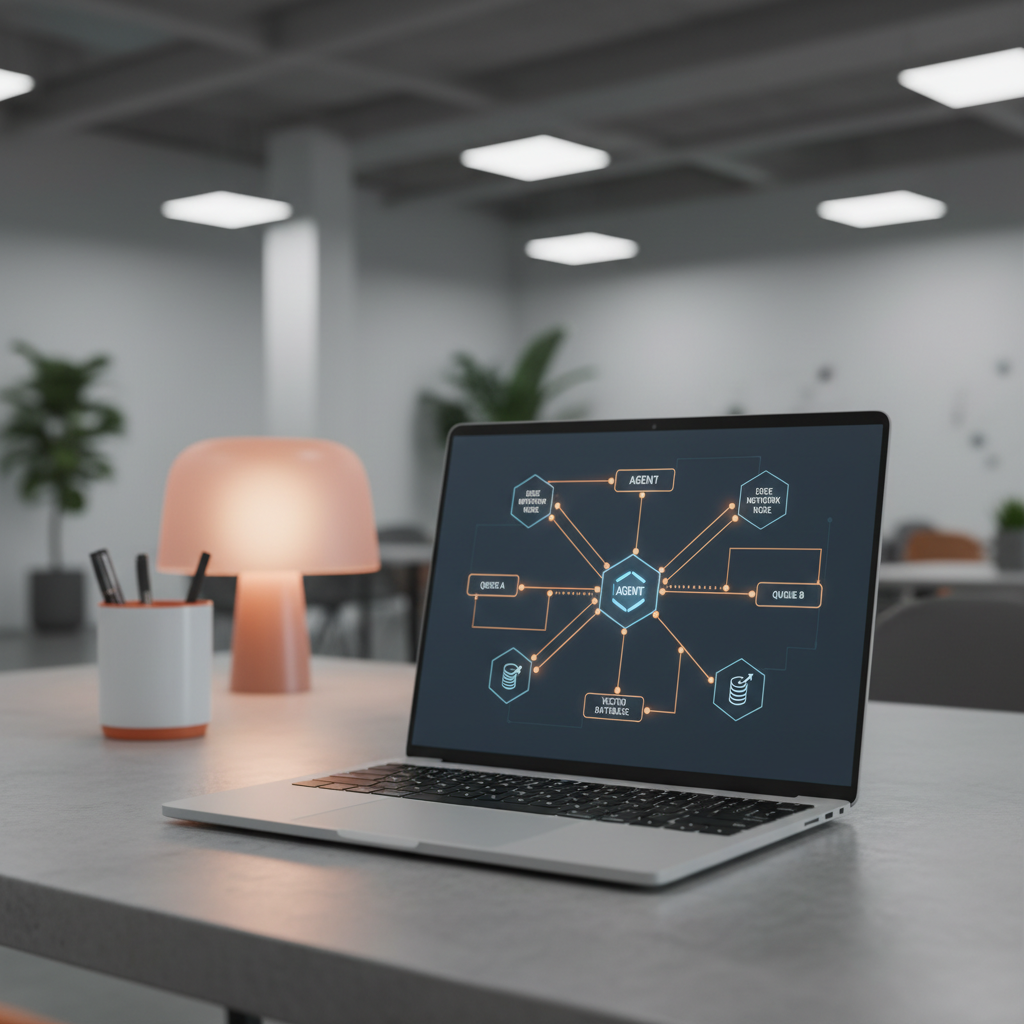
Cloudflare’s Agents Week put a spotlight on practical building blocks for shipping AI agents at the edge—faster, cheaper, and easier to operate.
Source: Cloudflare Agents Week — In Review.
What Cloudflare highlighted
- Edge-first execution with Workers and Durable Objects to keep agent loops close to users and data.
- Built-in ingredients for agent memory and tools: Vectorize for embeddings/RAG, D1/KV/R2 for state and files, Queues for background tasks.
- Observability and control via AI Gateway, giving teams a single place to track requests and manage model usage across providers.
- Security posture that travels with your agents: Zero Trust, Turnstile, and network-level controls at the edge.
For docs on Cloudflare’s AI Gateway, see Cloudflare AI Gateway.
Why this matters for teams shipping agents
- Latency: Running agent steps at the edge reduces round trips and speeds up tool use and RAG calls.
- Cost control: Unified metering and routing make it easier to right-size models and watch spend.
- Reliability: Durable state and queues help agents survive retries, timeouts, and parallel tasks.
- Compliance: Data stays closer to where it’s produced, with policy enforcement at ingress.
A reference architecture you can copy
- Entry: A Worker receives user input, authenticates the session, and normalizes the request.
- Guardrails: Validate inputs, sanitize prompts, and apply policy checks before tool use.
- Orchestration: A Durable Object coordinates the agent loop, tracks steps, and manages tool calls.
- Memory: Use Vectorize for embeddings/RAG; pair with D1 for structured agent state and KV for small, fast lookups.
- Tools: Call external APIs via fetch; offload long-running work to Queues; store large artifacts in R2.
- Models: Invoke hosted models through AI Gateway so you get centralized analytics and control.
- Observability: Emit traces/logs to your analytics sink; alert on failures, token spikes, and latency outliers.
Cost and performance tips
- Right-size the model for each step; reserve larger models for high-ambiguity tasks.
- Cache embedding results and RAG snippets where possible to cut repeated calls.
- Batch background work in Queues; stream responses to improve perceived latency.
- Measure everything through AI Gateway analytics before optimizing—let data guide model/provider choices.
Risks and gotchas
- State consistency: Keep a single source of truth for agent state (e.g., a Durable Object + D1) to avoid race conditions.
- Tool safety: Rate-limit tools, add input/output validation, and restrict network egress to trusted domains.
- Data residency: Be explicit about storage locations for embeddings, logs, and artifacts.
- Vendor coupling: Abstract model calls behind a gateway interface to preserve portability.
Bottom line
Cloudflare’s edge-native stack gives you the pieces to run production agents with lower latency, better cost visibility, and stronger guardrails—without stitching together a dozen separate services.
Want more practical AI build notes in your inbox? Subscribe to The AI Nuggets.
