



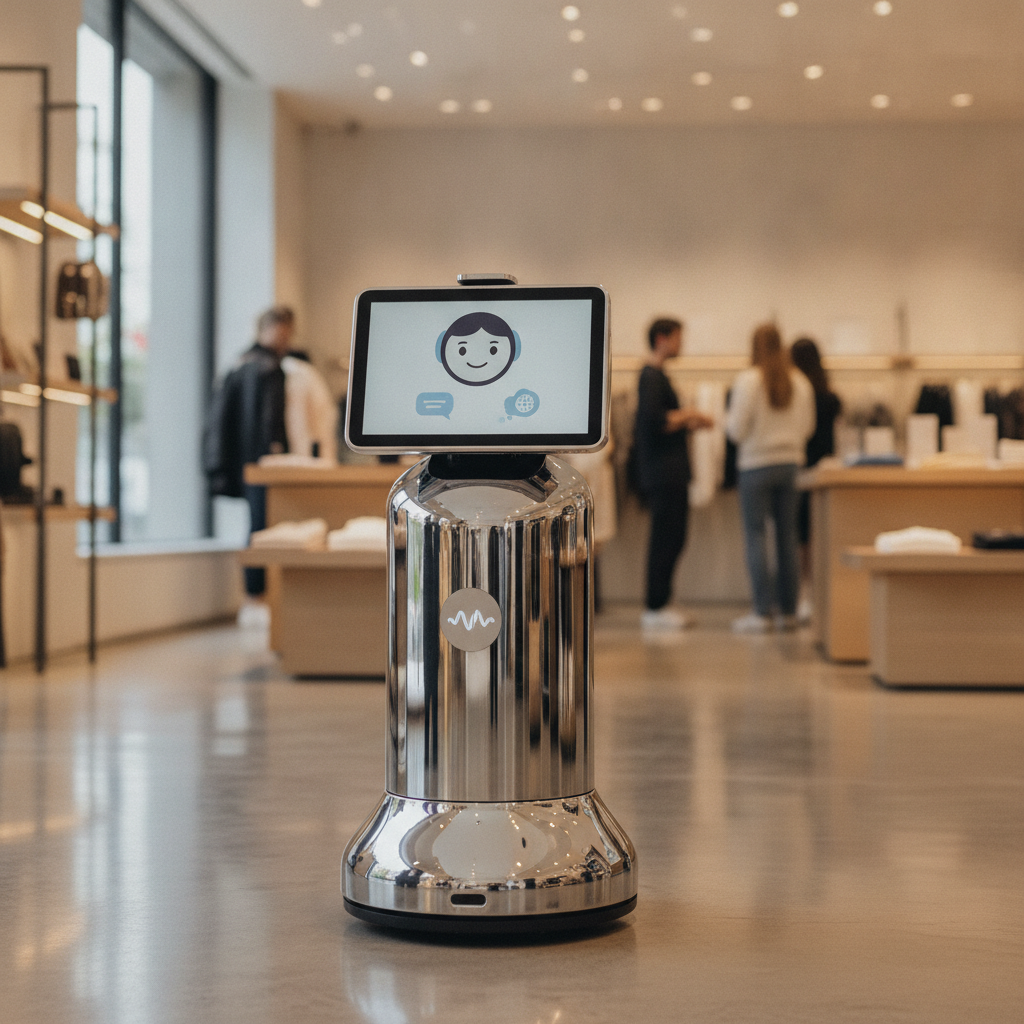
Telepresence robots are getting an AI upgrade. The OpenAI–avatarin collaboration points to a future where remote presence blends with real-time, multimodal assistants.
OpenAI announced a collaboration with avatarin to explore AI-enabled telepresence experiences—think natural conversation, vision, and task support delivered through a robot body. Source: OpenAI.
Why it matters
- Upgrade remote work: Send a robot instead of a plane ticket for site walk-throughs, store checks, and facility audits.
- Better customer moments: Offer guided retail or museum tours with instant product info, translation, and accessibility support.
- 24/7 operations: AI handles routine questions and escalation, humans step in for judgment calls.
- Cost and carbon: Fewer trips, faster resolutions, smaller footprints.
30-day pilot ideas
- Retail floor concierge: Greet, guide to aisles, answer FAQs, and hand off to staff for complex needs.
- Field service oversight: Remote expert joins via robot for diagnostics, safety checks, and step-by-step guidance.
- Corporate facilities tour: Security-approved routes with live Q&A and digital sign-off capture.
- Workplace accessibility: Wayfinding, live transcription, and multilingual support for visitors and employees.
- Training sandbox: Record supervised sessions to build role-specific prompts and playbooks.
Implementation tips
- Define autonomy bounds: Default to assistive mode with easy human take-over; log all interventions.
- Privacy by design: Disable default recording, blur faces where not needed, and post clear “AI-assisted” signage.
- Ground with your data: Use retrieval for product catalogs, policies, and floor maps; version prompts like code.
- Latency budget: Target <300ms speech response and smooth handoffs; pre-cache high-frequency answers.
- Safety playbooks: Non-contact navigation rules, restricted zones, and emergency stop protocol testing.
Metrics to prove ROI
- Time-to-resolution and first-contact resolution (FCR)
- Customer NPS/CSAT deltas on guided vs. unguided visits
- Travel avoided (cost and CO₂) and staff hours reallocated
- Escalation rate and safety incident rate
Risks and guardrails
- Consent and recording: Align with local laws (e.g., GDPR/CPRA); offer opt-out paths.
- Physical safety: Speed caps, obstacle detection, and geofencing as non-negotiables.
- Misinfo and bias: Constrain to trusted sources; clearly state uncertainty and hand off quickly.
- Security: Network segmentation, signed updates, and device inventory hygiene.
What to watch next
- Falling hardware costs vs. rising capabilities in vision and on-device inference
- Real-time translation quality and multimodal grounding improving human trust
- Regulatory guidance for public-space robots and accessibility standards
- Interoperability: Standard APIs across robot vendors and facilities systems
Takeaway: Telepresence plus AI isn’t sci-fi anymore—it’s a pragmatic way to extend your team, reduce travel, and improve service quality when deployed with clear guardrails.
Want more bite-sized, practical AI reads? Subscribe to our free newsletter: theainuggets.com/newsletter
