



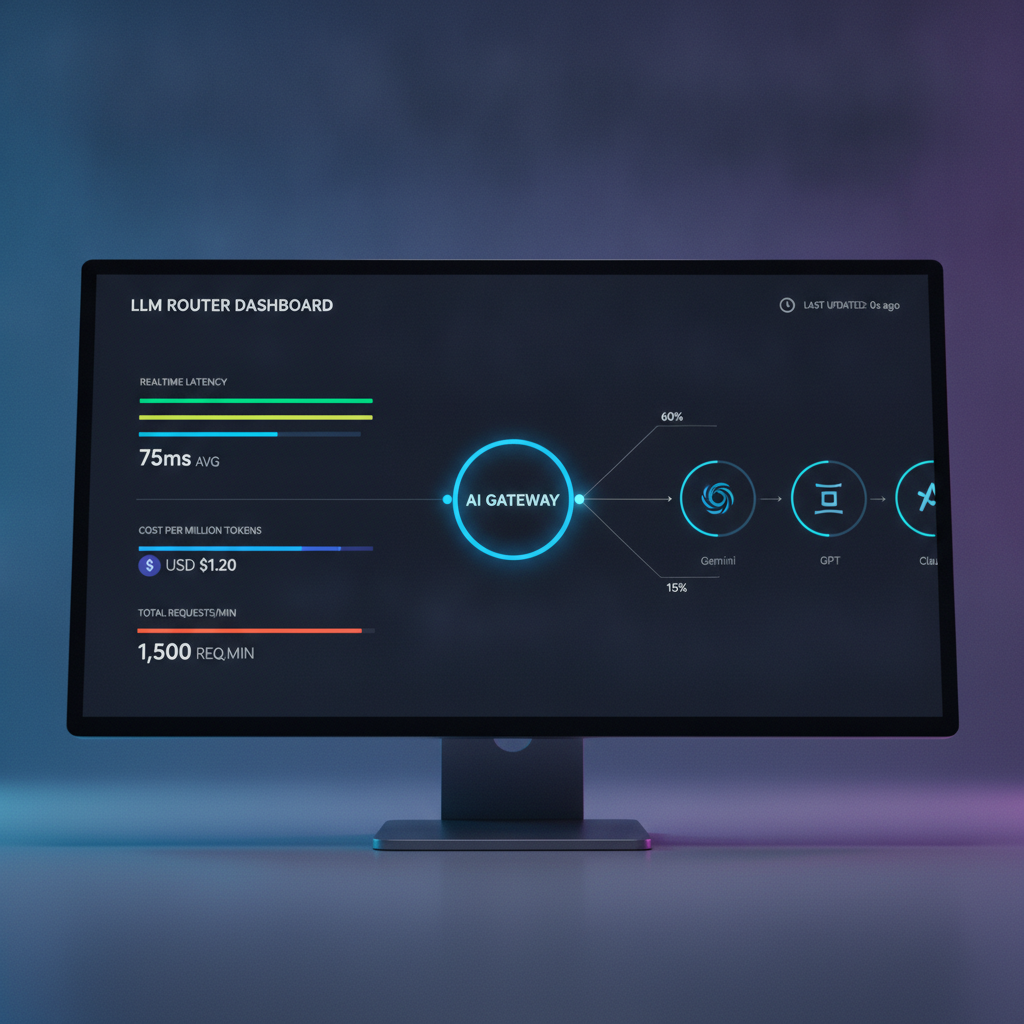
Model gateways—also called AI relays—are quickly becoming the control plane for LLM apps. They sit between your product and multiple model providers, standardizing APIs, routing traffic, cutting costs, and enforcing governance.
What is an AI relay?
An AI relay is a proxy layer that unifies access to many models (OpenAI, Anthropic, open-source) through one API. It adds routing, safety, caching, and observability so you can switch and scale without refactoring your stack.
Why teams use them now
- Cost control: route to cheaper models for easy tasks; reserve premium models for critical paths.
- Resilience: failover across providers to reduce outages and rate-limit pain.
- Speed: pick the lowest-latency region/model at request time.
- Governance: apply consistent safety filters, PII redaction, and prompts across vendors.
- Future-proofing: swap models as quality and pricing shift—without rewriting code.
Core features to look for
- Unified API: one schema for chat, tools/functions, image, embeddings, and batch jobs.
- Policy & routing: traffic splits, A/B tests, guardrails, fallbacks, and budget caps.
- Observability: request logs, token and latency analytics, prompt versioning, and replay.
- Caching: prompt/result caching and dedupe to cut spend and speed up hot paths.
- Evals: built-in offline and online evals tied to real usage.
- Security: zero-retention options, SOC2/ISO, VPC or on‑prem deployment, key management.
- Compliance: consent and data locality controls for regulated workloads.
- SLAs & quotas: enforce per-team or per-feature rate and spend limits.
Risks and trade-offs
- Vendor lock-in: avoid opaque, proprietary features. Prefer open SDKs and portable prompt formats.
- Latency overhead: measure added proxy latency; use regional relays and streaming.
- Feature lag: some model-specific capabilities may arrive late. Keep an escape hatch to call vendors directly.
- Data exposure: demand zero-retention paths and provider-level data controls; review DPA and subprocessor lists.
How to evaluate a relay (quick checklist)
- Run a week-long bakeoff: route 20–30% of traffic via the relay and compare cost/quality/latency.
- Test failover: intentionally break a provider key—verify seamless fallback and alerting.
- Price reality: model your top 5 workloads (chat, RAG, tools, batch) and verify invoice math.
- Security review: confirm data retention defaults, PII redaction, and private networking.
- Portability: migrate a sample app off the relay in under a day—prove there’s no hard lock.
- Observability depth: can you replay prompts, compare outputs, and tag runs by feature flag?
Adoption pattern that works
- Start narrow: one feature with clear metrics (CSAT, answer accuracy, cost/request).
- Add routing: A/B two models; promote the winner automatically on budget and quality.
- Layer safety: standardize PII redaction and jailbreak filters across providers.
- Turn on caching: cache high-volume prompts and embeddings used by RAG.
- Expand coverage: move other features once you’ve proven cost and stability gains.
Further context
For a timely overview of the emerging relay landscape and why it matters, see Simon Willison’s analysis of the relay market.
Takeaway
Relays turn model sprawl into a manageable platform. Standardize once, route intelligently, and keep a direct-call escape hatch. That’s how you scale with confidence.
Enjoyed this nugget? Subscribe to our newsletter for weekly, no-fluff tactics: theainuggets.com/newsletter.
