



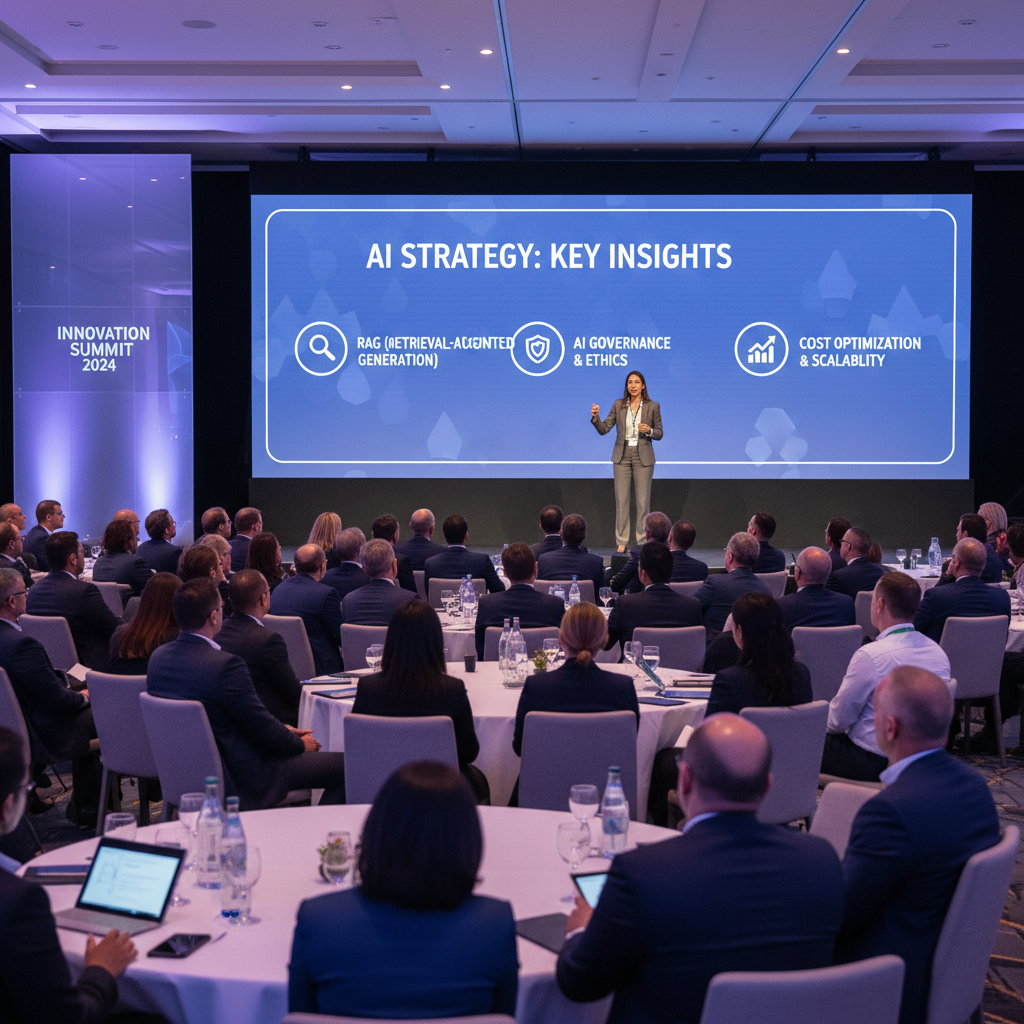
OpenAI shared perspectives at Endava Frontiers on where enterprise AI is headed and how to build responsibly. Here are five practical takeaways leaders can apply now, with links to dig deeper. Source: OpenAI at Endava Frontiers.
1) Start with assistive, high-ROI use cases
Augment workflows before you automate them. Prioritize copilots for support, research, analytics summaries, or internal knowledge search where human-in-the-loop is natural.
Scope narrowly with a clear success metric (e.g., reduce case handling time by 20%). Ship a pilot in weeks, not months, then iterate.
2) Ground models with your data (RAG + tools)
Use retrieval-augmented generation (RAG) to anchor answers in your vetted content. Keep a fresh vector index, constrain retrieval to trusted sources, and return citations.
Pair RAG with structured tools where possible—search, database queries, and form-fill APIs—to reduce hallucinations and improve determinism.
3) Control cost, latency, and quality with system design
Right-size models: use smaller or distilled models for classification and routing, and reserve flagship models for complex reasoning. Cache frequent prompts and chunk large workloads into batches.
Enforce schema with structured outputs for reliable downstream processing, and batch non-urgent jobs to cut cost. See OpenAI docs on structured outputs and the Batch API.
4) Build governance and safety in from day one
Set policies for data retention, PII handling, and human oversight. Red-team critical flows, log decisions, and document known limitations and mitigations.
Align with proven frameworks like the NIST AI Risk Management Framework for a common language across legal, security, and product teams. Reference: NIST AI RMF.
5) Prepare your org for adoption
Upskill teams with prompt patterns, tool use, and evaluation basics. Nominate change champions, publish AI usage guidelines, and celebrate quick wins to drive momentum.
Measure business impact, not just model scores: time saved, errors avoided, satisfaction improved, or revenue lifted.
Quick implementation checklist
- Pick one assistive workflow with clear ROI and owner
- Stand up secure data access and a minimal RAG pipeline with citations
- Define acceptance criteria and an evaluation set from real workloads
- Enforce structured outputs and add guardrails for safety and policy
- Instrument costs, latency, and user feedback from day one
- Pilot with 20–50 users, iterate weekly, then scale
Bottom line
Enterprise AI success is less about chasing the newest model and more about disciplined product thinking: tight scope, grounded data, measurable outcomes, and solid governance.
Want weekly, no-fluff insights like this? Subscribe to our newsletter: theainuggets.com/newsletter.
