



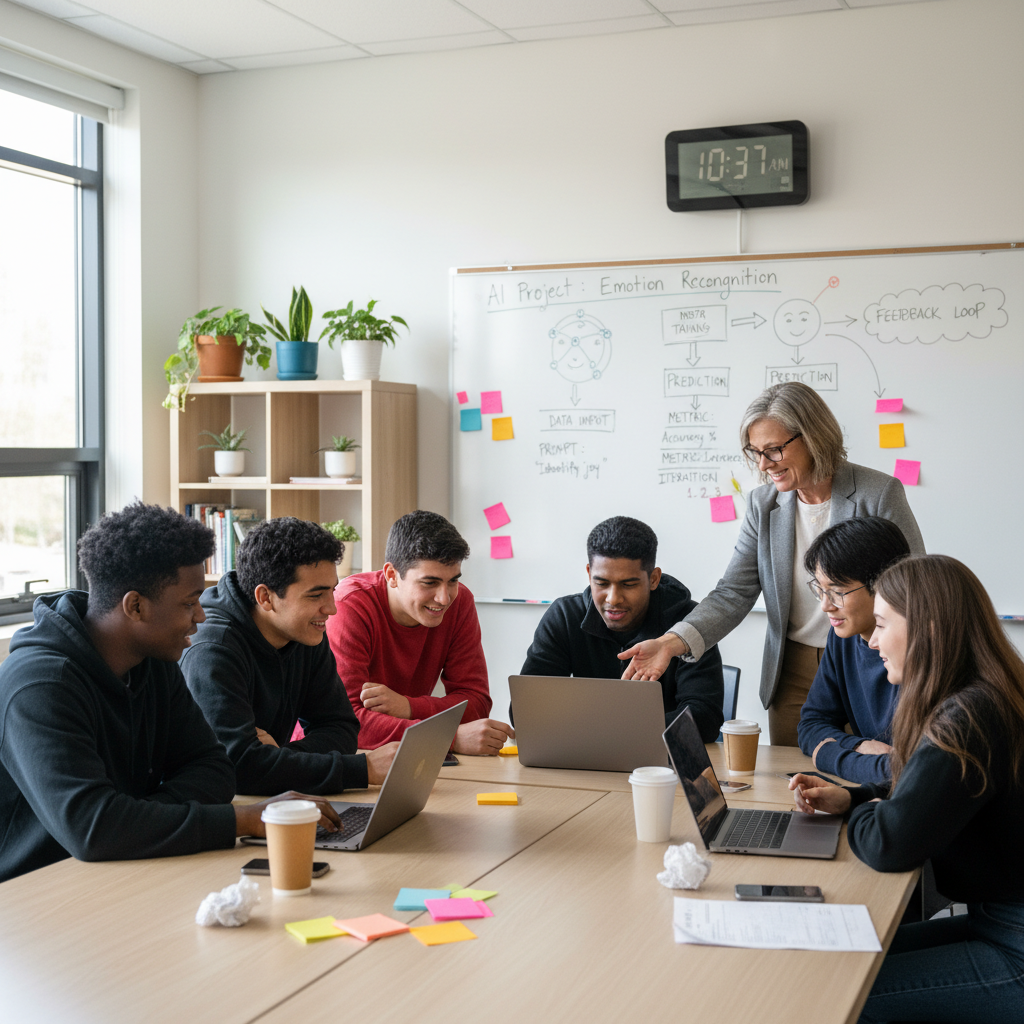
OpenAI introduced ChatGPT Futures: Class of 2026—an initiative spotlighting how students can learn and build with AI. If you’re a student or educator, here’s how to prepare and stand out.
What this means for students
AI literacy is quickly becoming a core skill. Programs like ChatGPT Futures reward real projects, ethical use, and clear communication—not just flashy demos.
Details evolve, so always check the official announcement for the latest. Meanwhile, you can start building the evidence of your skills today.
Quick actions for students (next 30 days)
- Pick a real problem at school or in your community, and build a tiny AI-powered solution (FAQ bot, study planner, data summarizer).
- Document everything: your goal, prompts, model settings, data sources, and results. Treat your README as your “science fair board.”
- Practice prompt patterns (role, task, constraints, examples) and keep a prompt log with before/after outputs.
- Show impact with simple metrics: time saved, errors reduced, students reached, or satisfaction scores.
- Respect privacy: never paste sensitive personal or school data. Use synthetic or anonymized examples.
- Publish a short demo video and a live prototype (even if rough). Link them on your portfolio site or GitHub.
- Add an “AI use statement” explaining which tools you used and how you verified accuracy.
Guidance for educators and counselors
- Introduce a lightweight AI literacy module: capabilities, limitations, and evaluation techniques (fact-checking, bias checks, source citation).
- Adopt transparent rubrics that reward process documentation, ethics, and measurable impact—not just output polish.
- Set clear guardrails on data privacy and plagiarism. Have students include an “AI use statement” with each project.
- Encourage students to create a simple model card: purpose, data, risks, and testing notes.
For broader context on responsible classroom use, see UNESCO’s guidance on generative AI in education (UNESCO).
Avoid common pitfalls
- Overclaiming: Don’t present AI-generated text as fully original research. Cite sources and note limitations.
- Hallucinations: Fact-check model outputs with reputable references before including them in your work.
- Privacy leaks: Exclude personal or school-sensitive data. Use dummy data for demos.
- Unclear ownership: Respect licensing for images, data, and code. Attribute properly.
How to stand out in applications
- Tell a clear story: problem, approach, results, and what you learned when things broke.
- Show the delta: before/after screenshots or metrics that quantify impact.
- Ship small, iterate fast: weekly commits, version notes, and public changelogs signal momentum.
- Make it reproducible: share prompts, config files, and a minimal setup guide.
Helpful links
- Announcement: ChatGPT Futures: Class of 2026 (OpenAI)
- Responsible use: OpenAI Usage Policies
- Education guidance: UNESCO: Generative AI in Education
Takeaway
You don’t need a huge team or budget to participate. Ship a small, useful AI project, document it well, measure impact, and demonstrate responsible use.
Want practical AI tips in your inbox? Subscribe to The AI Nuggets newsletter: theainuggets.com/newsletter.
