



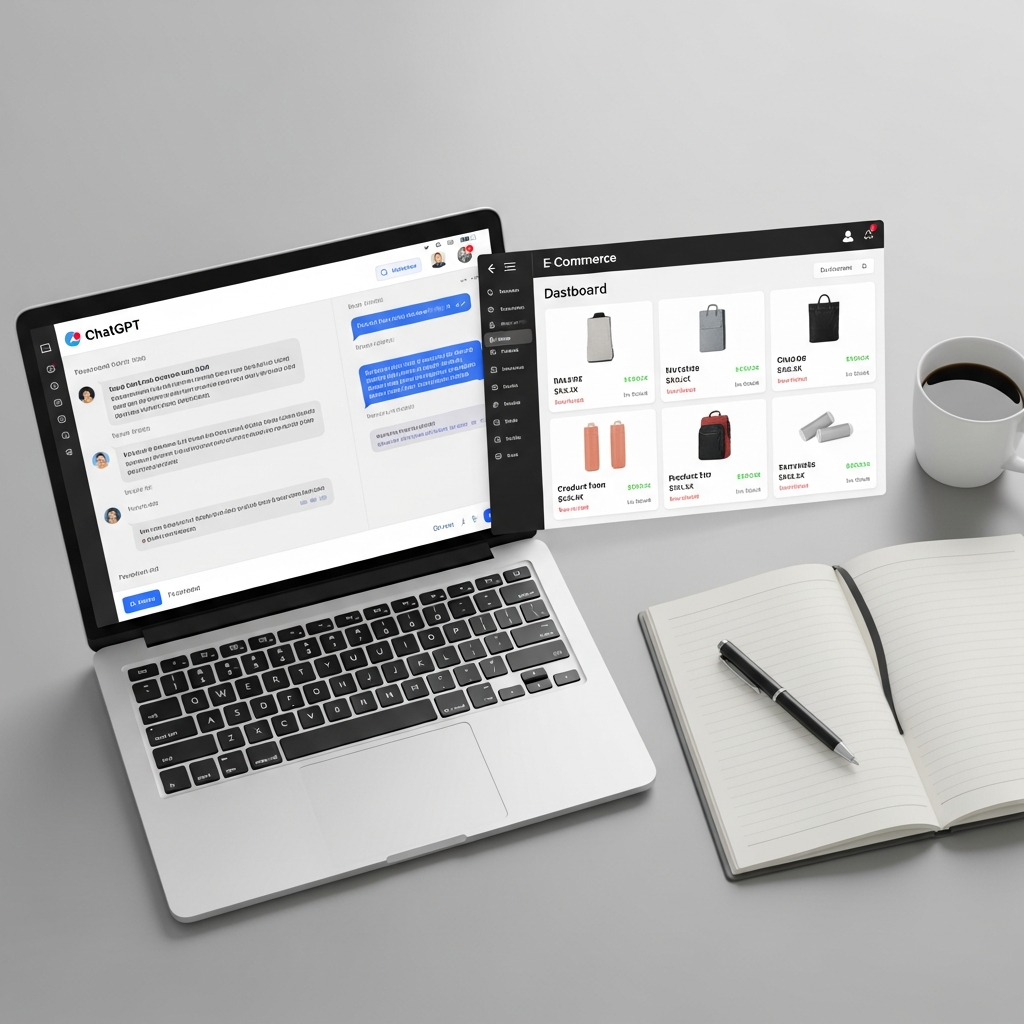
OpenAI just outlined how it’s powering product discovery inside ChatGPT—turning natural-language queries into shoppable, comparison-ready answers. Here’s what changed and how ecommerce teams can get ahead. Source: OpenAI.
What changed in ChatGPT
- Shopping-like answers: ChatGPT can summarize options and compare key specs, then point users to places to buy based on high-quality sources and partner data.
- Conversational narrowing: Users can refine by budget, size, brand constraints, or use case, and ChatGPT updates suggestions accordingly.
- Fresh, trusted inputs matter: The quality of product details depends on what’s available and accurate on the open web and from partners—outdated or sparse pages are less likely to surface.
The ecommerce playbook: Steps to take now
- Add and validate product structured data. Use schema.org/Product with price, availability, brand, model, GTIN/MPN, ratings, and shipping/returns where applicable.
- Keep pricing and availability machine-readable and consistent across your site. Update quickly when items go out of stock or variants change.
- Create comparison content that answers real queries (e.g., “best X under $Y,” “lightweight travel option,” “quietest for apartments”). Include explicit trade-offs and who each pick is for.
- Publish concise FAQs on each product: compatibility, setup, warranty, returns, and what’s in the box. These become quotable facts for LLMs.
- Use high-resolution images with descriptive alt text and file names. Show scale, ports, and key angles that answer common buyer questions.
- Maintain clean product sitemaps and canonical URLs. Avoid thin/duplicate pages that dilute signals.
- Mark discontinued products and link to successors. Keep spec sheets and manuals accessible.
- Watch for OpenAI partner/merchant programs related to product data. Join early-access or beta programs when available to improve coverage.
Content patterns LLMs tend to surface
- Clear model numbers, specs, and dimensions in text (not just images or PDFs).
- Side-by-side comparisons in HTML that are easy to parse.
- Up-to-date timestamps and “last updated” notes that signal freshness.
- Variant mapping (sizes, colors, bundles) with unambiguous labels.
- Transparent selection criteria and honest pros/cons to build trust.
How to test your visibility
- Run buyer-intent prompts in ChatGPT (e.g., “Best noise-cancelling headphones under $200 for travel, avoid heavy clamping force”). See if your pages appear.
- Ask, “What does [your brand] offer for [use case]?” Note how your products are described and which details are missing.
- Validate citations and links ChatGPT provides. If it’s pulling outdated info, refresh your pages and structured data.
- Monitor analytics for spikes in direct traffic and branded search after content updates; annotate changes to correlate improvements.
Takeaway: Chat-based shopping rewards structured, current, and comparison-ready content. If your product pages read like they were written to answer a helpful sales associate, you’re on the right track.
Get weekly, no-fluff AI playbooks for builders and operators. Subscribe to The AI Nuggets newsletter.
