



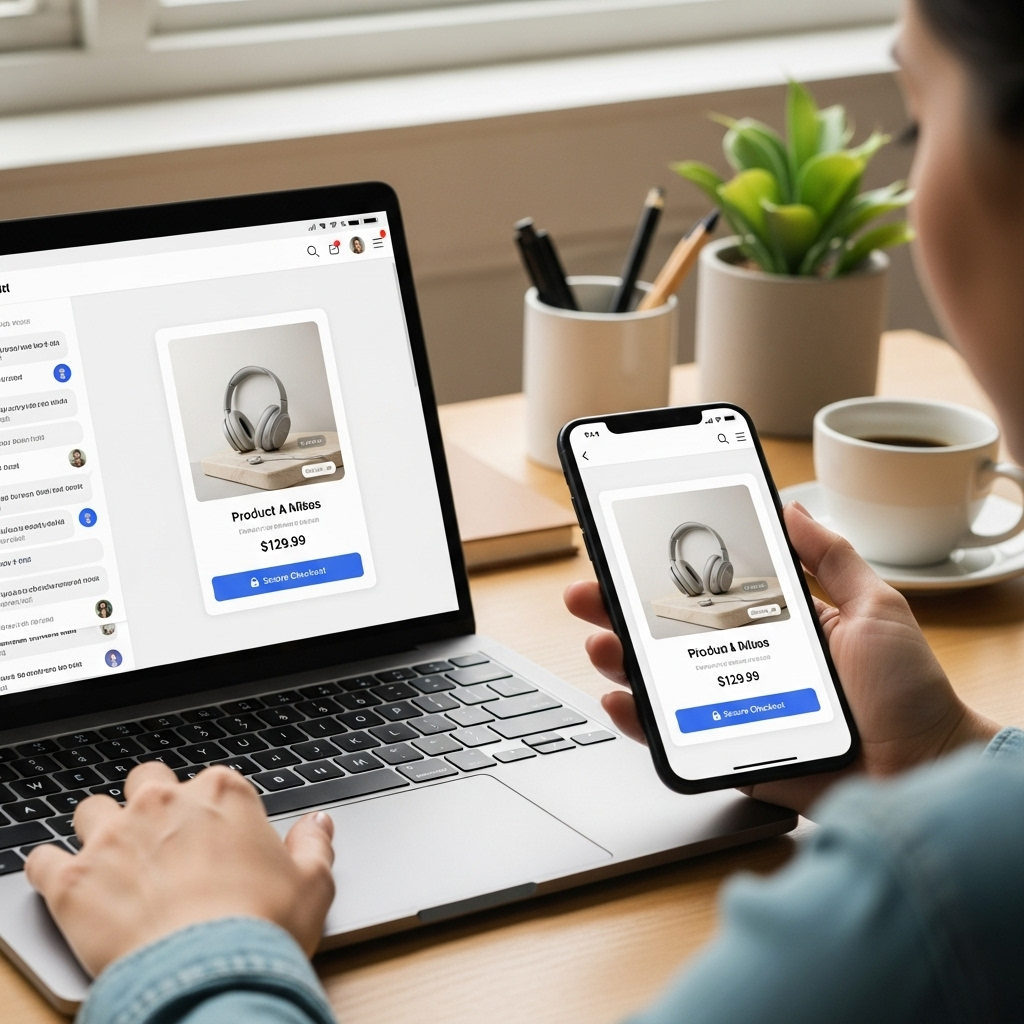
OpenAI just announced “Buy it in ChatGPT,” bringing checkout directly into conversations. See the official post: OpenAI: Buy it in ChatGPT.
What is “Buy it in ChatGPT”?
It’s native commerce inside ChatGPT. Users can discover a product or offer, confirm details, and pay—without leaving the chat. It’s essentially a new way for users to make purchases within ChatGPT.
For brands and builders, it compresses the funnel: from intent to purchase in one interface. Expect fewer drop‑offs and faster experiments.
How it works (at a glance)
- In‑chat product offers: The assistant shares a product, plan, or bundle with price and key details. This feature encourages users to act instantly.
- Native checkout: Users complete purchase steps inside ChatGPT via a secure flow, which makes them more likely to proceed with the buying process here.
- Fulfillment handoff: After payment, users get confirmations and next steps (e.g., access links, codes, or delivery info).
- Developer integration: Builders wire up their catalog, pricing, and fulfillment logic to enable in‑chat purchases.
Who should care
- DTC brands: Test starter kits, refills, and limited drops where questions are answered in real time, allowing you to buy within ChatGPT.
- SaaS and subscriptions: Offer trials, plan upgrades, and add‑ons with immediate activation, allowing users to comfortably make purchases with ChatGPT.
- Creators: Sell courses, templates, and digital packs at the moment of intent.
- Local and services: Bookings, deposits, or consultations handled conversationally.
- Marketplaces: Curated, high‑intent bundles for niche use cases.
Get your stack ready (quick checklist)
- Define 1–3 hero offers: Clear pricing, value props, and fulfillment steps.
- Structure your catalog: Consistent titles, variants, SKUs, and deliverables for machine‑readable mapping, making it easier to buy the right products in ChatGPT.
- Tighten post‑purchase flows: Instant access emails, webhooks, or license delivery.
- Policy hygiene: Refunds, support SLAs, and tax/shipping disclosures spelled out.
- Measurement plan: Track conversions, AOV, and attribution lift from in‑chat vs. web.
- Creative testing: Short, persuasive copy and trust cues tailored for a chat window.
- Risk review: Fraud, inventory sync, and rate‑limit protections.
Risks and watch‑outs
- Attribution gaps: Chat‑origin conversions may be hard to reconcile with existing analytics. Plan tagged links and server‑side events.
- Privacy and consent: Only share data essential for fulfillment and honor user preferences while observing buying preferences in ChatGPT.
- Post‑purchase support: Make refunds, cancellations, and human escalation obvious.
- Quality control: Prevent misleading claims; keep offers accurate and up‑to‑date.
- Platform dependence: Diversify channels and maintain a direct relationship (email/SMS) after purchase.
Example use cases
A skincare brand converts routine‑finder chats into a two‑item starter kit purchase. An indie dev sells a plug‑in license right after the bot validates the user’s OS, illustrating how buyers use ChatGPT effectively.
The takeaway
In‑chat checkout turns support and discovery into sales. Start with a narrow offer, wire up fulfillment, and measure the lift. The brands that move first will learn fastest, especially by integrating ChatGPT for purchases.
Get smarter about AI in business. Subscribe to our free newsletter: theainuggets.com/newsletter.
